
Reliable electricity is essential for industrial operations. Even a short power interruption can stop production lines, disrupt sensitive equipment and increase operating costs.
Traditionally, many factories in Pakistan have relied on diesel generators for backup electricity. Today, Battery Energy Storage Systems (BESS) offer another option, particularly for facilities that already operate solar power systems.
But is BESS better than a diesel generator?
The answer depends on the factory’s electrical load, expected outage duration, available charging sources, maintenance requirements and overall project economics.
This guide compares BESS and diesel generators for industrial applications in Pakistan and explains when using both technologies may be the most practical solution.
What Is the Difference Between BESS and a Diesel Generator?
A Battery Energy Storage System (BESS) stores electricity and releases it when needed. An industrial installation combines batteries with power-conversion equipment, a Battery Management System (BMS), an Energy Management System (EMS) and appropriate safety controls.
A diesel generator, by comparison, produces electricity by using a diesel engine to drive an alternator.
The fundamental difference is simple:
- BESS stores electricity obtained from a permitted source, such as the grid or an on-site solar installation.
- A diesel generator produces electricity by consuming fuel.
For a detailed explanation of the storage technology, read MFES Solar Energy’s guide: What Is BESS and How Does It Work?
BESS vs Diesel Generator: Industrial Comparison
| Feature | Industrial BESS | Diesel Generator |
|---|---|---|
| Energy source | Previously stored electricity | Diesel fuel |
| Response | Fast electronic response; transfer depends on system design | Startup and transfer time required |
| Backup duration | Limited by usable battery energy and recharging | Limited by fuel availability and equipment operating constraints |
| Operating noise | Generally quiet, although cooling equipment produces noise | Engine and exhaust noise |
| Maintenance | Battery, cooling, controls and electrical inspections | Engine servicing, oil, filters and fuel system |
| On-site emissions | No combustion emissions during discharge | Exhaust emissions during operation |
| Solar integration | Can store eligible surplus solar electricity | Requires additional controls for coordinated operation |
| Upfront investment | Often substantial, particularly for longer duration | Depends on generator rating and installation |
| Running costs | Charging electricity, losses, battery degradation and maintenance | Fuel consumption, servicing and maintenance |
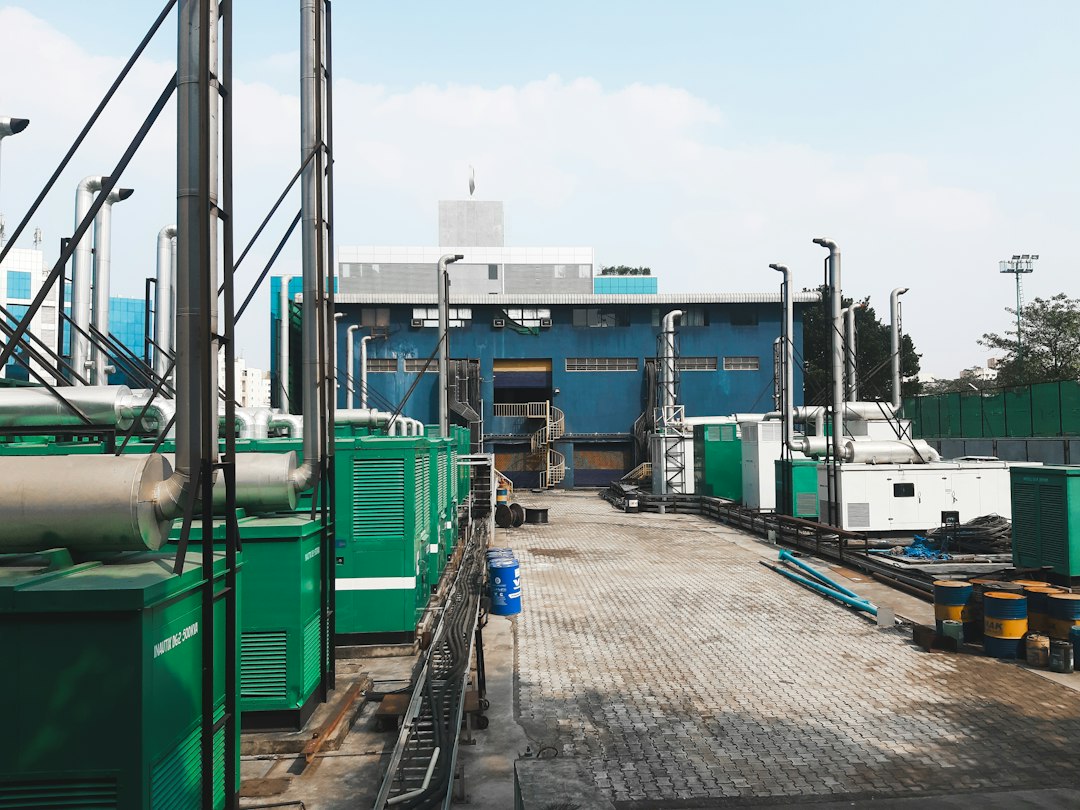
Neither solution is automatically the best choice for every factory.
1. Operating Cost: BESS vs Diesel Generator
Operating cost is one of the main reasons industrial businesses investigate energy storage.
Diesel generator operating costs
A diesel generator requires fuel whenever it operates. Actual electricity generation cost depends on several factors:
- Diesel price per litre
- Generator loading and fuel efficiency
- Maintenance and engine servicing
- Oil and filter replacement
- Operating hours
- Equipment age and condition
A generator operating at an inefficient loading level may have a higher cost per unit of electricity than one operating near its efficient range.
BESS operating costs
A BESS does not burn fuel when discharging. However, stored electricity is not free.
Its economic calculation must include charging electricity costs, conversion losses, battery degradation, auxiliary consumption, maintenance and the initial investment.
For factories with solar installations, storing eligible surplus solar production may reduce dependence on some grid purchases or generator operating hours.
Important: Lower operating expenses do not automatically mean the BESS project has a shorter payback period. A proper comparison must consider the total lifecycle cost of both systems.
2. Backup Duration: Which System Can Run a Factory Longer?
Backup duration is one of the most important differences between battery storage and diesel generation.
A diesel generator can continue producing electricity while sufficient fuel, servicing capacity and suitable operating conditions are available.
A BESS has a defined amount of stored energy. Once the usable energy is depleted, it must recharge from an available source.
Example: A factory requiring 200 kW for three hours
Suppose a facility needs to support 200 kW of critical loads for three hours.
The required AC energy is:
Illustrative load calculation; not an equipment quotation or final engineering design.
If the design assumes 90% usable depth of discharge and 95% discharge conversion efficiency, the simplified nominal battery estimate becomes:
600 ÷ (0.90 × 0.95) ≈ 702 kWh
This is only an educational estimate. Final sizing must account for battery aging, temperature, discharge-rate limits, operating reserves, auxiliary loads and manufacturer specifications.
The BESS would also require sufficient continuous AC output capacity and suitable controls for backup operation.
A diesel generator must instead be selected based on the facility’s continuous demand, starting currents, power factor, load characteristics and other engineering requirements.
3. Maintenance Requirements
Diesel generators contain mechanical systems that require periodic maintenance. Servicing may include engine oil, filters, cooling components, fuel equipment and electrical inspections.
BESS equipment generally requires less engine-related maintenance because it has no combustion engine.
However, BESS is not maintenance-free.
Industrial battery systems still require:
- Battery condition monitoring
- Thermal management inspections
- Electrical protection testing
- Firmware and control-system maintenance
- Safety-system checks
- Periodic performance evaluation
Manufacturers’ maintenance instructions must be followed for either technology.
4. Can BESS Replace a Diesel Generator Completely?
In some applications, a correctly engineered BESS can replace a generator for defined loads and outage durations.
But complete replacement is not appropriate in every situation.
A factory experiencing relatively short interruptions may be able to meet its backup requirements with properly sized battery storage.
A facility facing frequent, extended outages may require additional generation or significant battery capacity.
The replacement decision depends on three essential questions:
- What is the maximum power the factory must support?
- How long must those loads remain operational?
- How will the batteries recharge before the next outage?
Engineers must also assess switching arrangements, electrical protection, equipment starting requirements and whether the BESS supports intentional islanding.
A standard grid-connected battery installation should not be assumed to provide backup power automatically.
5. Solar + BESS vs Solar + Diesel Generator
Many Pakistani factories already operate rooftop solar systems. This creates an opportunity to evaluate energy storage alongside existing generation equipment.
Solar with diesel generator
Solar can serve daytime loads when permitted by the electrical design. A diesel generator can provide electricity during grid outages, subject to the necessary switching and coordination equipment.
The generator still requires fuel while operating.
Solar with BESS
A suitably designed solar-plus-storage system can charge batteries from eligible solar electricity and use that stored energy later.
Potential applications include managing selected demand peaks, increasing on-site use of solar generation and maintaining designated loads during outages.
However, these benefits depend on the PCS, EMS, BMS, interconnection architecture and permitted operating arrangement.
Solar + BESS + Diesel Generator
A hybrid solution can combine the strengths of all three technologies.
Solar provides electricity when generation is available, BESS supplies stored electricity according to the operating strategy, and a diesel generator can provide additional backup or generation during extended interruptions.
This arrangement requires professionally engineered controls and protection coordination. It is not achieved simply by connecting three pieces of equipment together.
6. Which Option Is Better for Different Factory Requirements?
For short interruptions and selected critical loads: BESS may be suitable when the required transfer performance, stored energy and electrical arrangement are available.
For prolonged outages with uncertain recharging: A diesel generator may remain important, provided fuel and maintenance support are reliable.
For factories with existing solar installations: Adding BESS may create opportunities to use more solar energy on-site and manage selected loads.
For factories requiring several operating strategies: An engineered solar, BESS and generator hybrid may be worth evaluating.
The appropriate decision should follow a technical and financial assessment rather than a universal recommendation.
7. How to Compare Total Cost of Ownership
Before investing, industrial operators should compare the total cost of ownership over a defined study period.
For a diesel generator, this includes equipment purchase, installation, fuel, servicing, repairs and eventual replacement or overhaul costs.
For BESS, it includes battery capacity, PCS, EMS/BMS, thermal and fire safety equipment, electrical works, charging energy, conversion losses, maintenance and battery replacement or augmentation where required.
A proper model should also consider:
- Annual operating hours
- Actual factory load profiles
- Solar generation data
- Applicable electricity tariffs
- Diesel consumption under realistic loading
- Equipment warranties and expected usable lifetime
- Value of avoided production interruptions
Without these inputs, claims such as "BESS saves 50% compared with diesel" cannot be reliably applied to an individual factory.
8. What Should a Factory Check Before Installing BESS?
Before comparing supplier quotations, the facility’s engineering team should gather:
- At least 12 months of electricity bills
- Available 15-minute or hourly load data
- Details of existing generators and solar installations
- Critical-load requirements and outage history
- Required backup duration
- Transformer, switchgear and protection information
- Space, ventilation and fire-safety requirements
These details help establish the real power and energy needs of the proposed installation.
Frequently Asked Questions
Is BESS cheaper than a diesel generator in Pakistan?
Not necessarily. BESS can have lower costs during some operating strategies, but its upfront investment may be higher. The result depends on charging costs, diesel prices, equipment sizing, usage and battery lifetime.
Can industrial BESS operate without solar panels?
Yes. Depending on the equipment and permitted electrical arrangement, a BESS may charge from an approved grid connection or another suitable electricity source.
Does BESS produce electricity?
No. It stores electricity and returns a portion of that energy later. Conversion and other losses mean the output is lower than the energy used to charge it.
Is BESS better for uninterrupted factory operations?
It can provide fast backup when specifically designed for that purpose. However, uninterrupted operation requires correct transfer systems, power capacity, stored energy and protection coordination.
Can BESS and a diesel generator work together?
Yes. Properly engineered hybrid systems can coordinate battery storage with diesel generation and solar power. Compatibility, dispatch strategy and safety design must be evaluated.
Conclusion: BESS or Diesel Generator?
The choice between BESS and a diesel generator depends on what the industrial facility needs to achieve.
BESS can provide fast-response stored energy, support selected solar applications and reduce some generator operating hours. Diesel generators remain useful for longer backup requirements when fuel supply and servicing are available.
For many industrial facilities, the right answer may be an engineered hybrid system rather than choosing only one technology.
Factories considering battery storage should begin with real operating data, clear backup requirements and a project-specific feasibility study.
MFES Solar Energy can help businesses discuss industrial solar and energy-storage requirements and assess potential system configurations.
Contact MFES Solar Energy for an initial technical discussion.